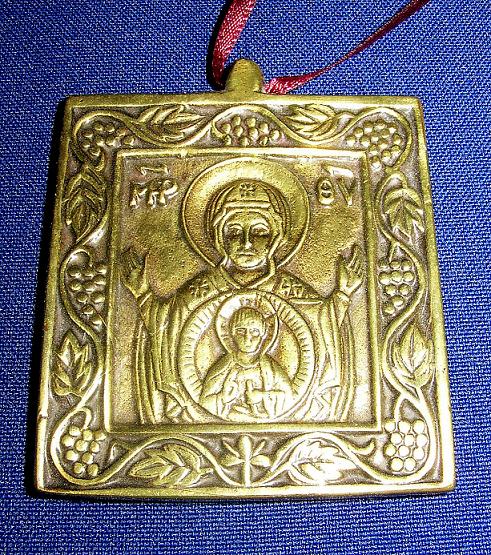
Solemnity of Mary, the Holy Mother of God
Solemnity (Holyday of Obligation)
- Feast Day
- January 1
The Solemnity of Mary, the Holy Mother of God, falls on January 1, the Octave Day of the Nativity of the Lord. It is a Holyday of Obligation in the Latin Church and the principal Marian feast of the Roman Calendar, honoring the divine maternity of the Blessed Virgin Mary under the title Theotokos, "God-bearer."
The dogmatic foundation of the feast is the definition of the Council of Ephesus (431), which condemned Nestorius and taught that the one Christ is true God and true man, so that Mary, who bore him in the flesh, is rightly called Mother of God. Cyril of Alexandria's letters to Nestorius were received by the Council as the rule of faith, fixing Theotokos in the Church's vocabulary.
The Second Vatican Council, in Lumen Gentium chapter 8 (1964), reaffirmed that "the Virgin Mary, who at the message of the angel received the Word of God in her heart and in her body, and gave Life to the world, is acknowledged and honored as being truly the Mother of God and Mother of the Redeemer."
Paul VI's Apostolic Exhortation Marialis Cultus (1974) explained the placement of the solemnity on January 1 within the Octave of Christmas: it directs the Church's praise on the new year to the Mother through whom we received the Author of life, and is also observed by the Church as a World Day of Peace, instituted by Paul VI in 1968.
The solemnity unites three layers of celebration: the divine maternity defined at Ephesus, the Octave of Christmas, and the World Day of Peace. Lumen Gentium teaches that Mary's motherhood is not separate from her Son's mystery but is its earliest fruit. Honor paid to her on January 1 is therefore Christological: the Church proclaims that the child of Bethlehem is one Person, true God and true man, and that Mary's title Theotokos guards this unity.
Patronages
the universal Church · mothers
Sources