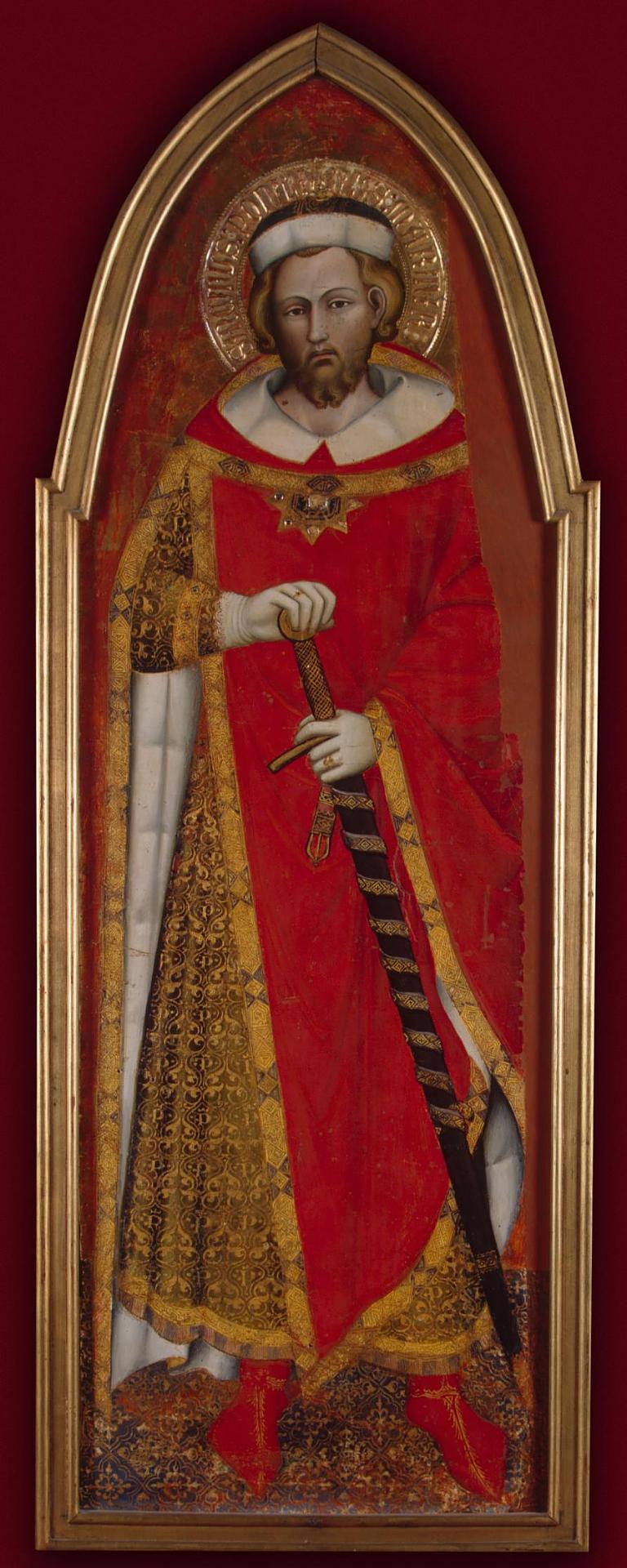
Saints Pontian and Hippolytus
Pope and Priest, Martyrs
- Feast Day
- August 13
- Life
- 170–235
- Born
- Rome (Pontian); unknown (Hippolytus)
Pope Saint Pontian was elected Bishop of Rome on July 21, 230, succeeding Pope Saint Urban I. His five-year pontificate is significant for two events: the formal posthumous condemnation in a Roman synod of the writings of Origen of Alexandria (which had been censured by his bishop Saint Demetrius), and the reconciliation of Hippolytus and his schismatic faction with the Catholic Church.
Saint Hippolytus, born about 170, was a learned priest and theologian of the Roman Church, a disciple of Saint Irenaeus, and the author of important works in Greek, including the Apostolic Tradition (a major source for our knowledge of early third-century Roman liturgy and orders) and the Refutation of All Heresies. About 217 he had separated himself from Pope Saint Callixtus in opposition to what he considered Callixtus's leniency toward repentant adulterers and apostates and his alleged Modalist Christological tendencies. Hippolytus had himself elected antipope by his followers, the first known antipope in Roman history, and continued his schism under Popes Urban I and Pontian.
In 235 the new Emperor Maximinus Thrax, opening a persecution of Christian leadership, exiled both Pope Pontian and the antipope Hippolytus together to the metalla, the unhealthy mines of Sardinia, for forced labor. There the two Roman leaders were reconciled. Pope Pontian, anticipating his death from the conditions of the mines, formally resigned the papacy on September 28, 235 (the first papal resignation recorded in history), so the Roman Church might elect a successor (Pope Saint Anteros). Hippolytus, before his own death, urged his followers to return to communion with the legitimate Pope. Both Pontian and Hippolytus died of the brutal conditions of the mines about August 13, 235; their bodies were translated to Rome by Pope Fabian (236-250) and buried with honors, Pontian in the Catacomb of Saint Callixtus and Hippolytus on the Via Tiburtina.
The fourth-century Depositio Martyrum of Filocalus (354) records both martyrs together on August 13. The post-Vatican II General Roman Calendar joins them in a single Optional Memorial.
The joint Memorial of Pontian and Hippolytus is a remarkable lesson of ecclesial reconciliation, the schismatic and the Pope reunited in the witness of martyrdom. Hippolytus's Apostolic Tradition (recovered in the late nineteenth century) is the principal source for the Anaphora used today as the Second Eucharistic Prayer of the Roman Missal, restoring to the Catholic liturgy a third-century Roman text from a saint who had once schismatically separated himself.
Patronages
horses (Hippolytus, by name-association)
Sources