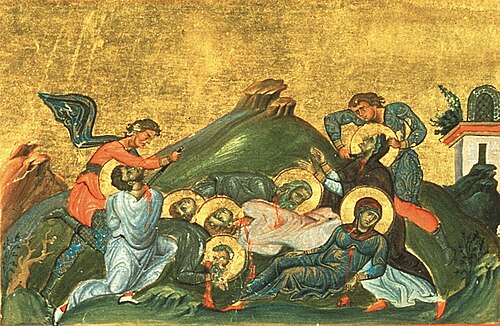
Saints Perpetua and Felicity
Martyrs
- Feast Day
- March 7
- Life
- d. 203
- Born
- Carthage, Roman province of Africa
Vibia Perpetua was a young noblewoman of Carthage, about twenty-two years old, married, and nursing an infant son. Felicity was a slave woman who was eight months pregnant at the time of her arrest. Both were catechumens preparing for baptism when they were seized in the persecution of Septimius Severus, who had forbidden conversion to Christianity.
The Passio Sanctarum Perpetuae et Felicitatis, partly written by Perpetua herself in prison, is among the earliest Christian texts authored by a woman. It records her steadfast refusal to renounce Christ despite the pleas of her pagan father, her visions while awaiting martyrdom, and the birth of Felicity's daughter in prison shortly before the execution.
Perpetua, Felicity, and their companions Saturus, Saturninus, Revocatus, and Secundulus were baptized while imprisoned. On March 7, 203, during games celebrating the birthday of the emperor's son Geta, they were exposed in the amphitheater of Carthage to wild beasts and finished by the sword.
Both saints are named in the Roman Canon (Eucharistic Prayer I), an indication of their veneration in Rome from the earliest centuries.
The Passion of Perpetua and Felicity is a foundational document of early Christian martyrology, witnessing both to the courage of women in the face of Roman persecution and to the equality of slave and free in Christ. Saint Augustine preached at least three sermons on their feast (Sermons 280-282), drawing on their account to teach that the grace of God works equally in matron and slave, in mother and virgin. Their inclusion in the Roman Canon places them at the heart of the Eucharistic memory of the Latin Church.
Patronages
mothers · expectant mothers · Carthage
Catholic Churches Named After Saints Perpetua and Felicity
2 parishes on Catholic Church Times share Saints Perpetua and Felicity's name. Find their Mass times, confession schedules, and adoration hours:
- Saints Perpetua and Felicity — Quezon City, National Capital Region
- St. Perpetua and Felicity Catholic Church — Saint Cloud, FL
Sources