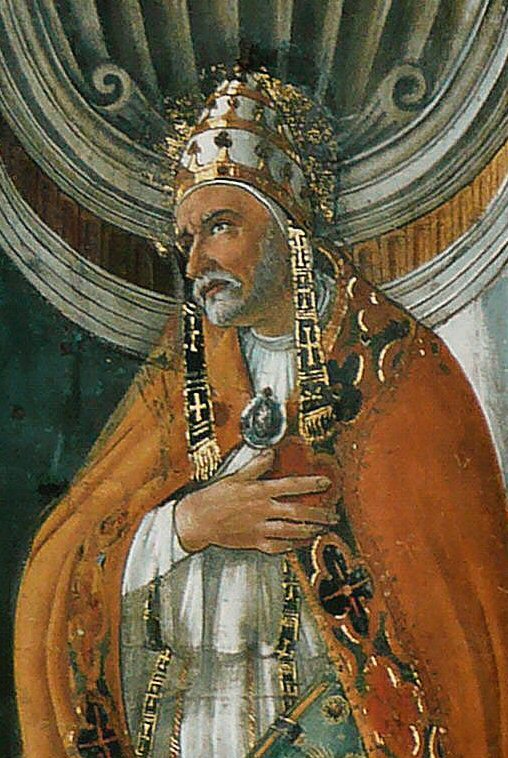
Saint Sixtus II and Companions
Pope and Martyrs
- Feast Day
- August 7
- Life
- d. 258
- Born
- Greece (traditional)
Pope Saint Sixtus II governed the Roman Church from August 30, 257 (or shortly thereafter) until his martyrdom on August 6, 258, a pontificate of about eleven months. He was reputedly Greek by origin, of philosophical training, and is praised by the Liber Pontificalis as a man of great peace, who restored communion with the African and Eastern churches that had been ruptured under his predecessor Pope Stephen I in the controversy on the rebaptism of heretics.
His martyrdom occurred in the persecution under the Emperor Valerian, who in August 258 issued a rescript ordering the immediate execution of any Christian bishop, priest, or deacon. Sixtus, while celebrating the liturgy seated in his episcopal cathedra (chair) in the Catacomb of Praetextatus on the Via Appia, was apprehended together with four of his deacons (Januarius, Magnus, Vincent, and Stephen) and beheaded on the spot, on August 6, 258. Two further deacons (Felicissimus and Agapitus) were martyred shortly afterward, and the seventh deacon, Saint Lawrence, was martyred four days later, on August 10, 258. Saint Cyprian of Carthage, in his Letter 80, written from his own approaching martyrdom about three weeks after the event, gives the contemporary account: Sixtus was put to death in the cemetery, on the eighth day before the Ides of August, and four deacons with him.
Sixtus II is named in the First Eucharistic Prayer (the Roman Canon) in the list of martyrs after the Apostles: Linus, Cletus, Clement, Sixtus, Cornelius, Cyprian. His Memorial joins those of his companion deacons of August 6, 258 (Januarius, Magnus, Vincent, Stephen, Felicissimus, and Agapitus); the Memorial of the seventh deacon, Saint Lawrence, on August 10 has been raised to the rank of Feast in the General Calendar. The August 6 dies natalis is transferred to August 7 because of the Feast of the Transfiguration of the Lord.
Sixtus II and his deacons exemplify the martyrdom of the Catholic hierarchy under the Roman persecutions and the unbroken witness of Eucharistic charity unto blood. The position of Sixtus's name in the Roman Canon, prayed at every Mass of the Roman Rite, makes him one of the most frequently invoked saints in the Catholic liturgy. The Memorial of August 7 honors the small but historic college of seven deacons who served the Roman Church and gave their lives with their bishop in a single liturgical week.
Sources