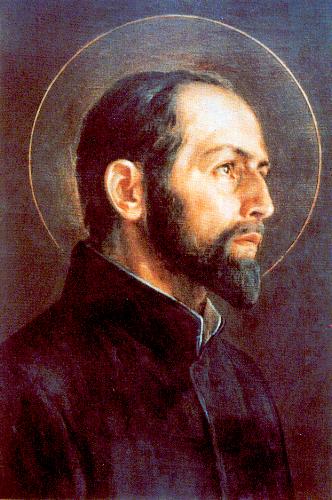
Saint Anthony Zaccaria
Priest
- Feast Day
- July 5
- Life
- 1502–1539
- Canonized
- 1897
- Order
- Clerics Regular of Saint Paul (Barnabites)
- Born
- Cremona, Duchy of Milan
Saint Anthony Mary Zaccaria was born at Cremona in 1502. He took a doctorate in medicine at the University of Padua in 1524 but soon turned to theological studies and was ordained priest at Cremona in 1528. While a young priest he gave catechetical instruction to the children and the poor of his native city.
Settled at Milan, he founded in 1530 the Clerics Regular of Saint Paul, a community of priests living under vows and dedicated to preaching, the reform of clerical life, and the renewal of Christian piety among the laity. The community took its popular name, the Barnabites, from its early base at the Church of Saint Barnabas in Milan, given them in 1545. With Countess Ludovica Torelli he also founded a women's branch, the Angelic Sisters of Saint Paul, the first congregation of women religious in the Counter-Reformation Church to receive papal approval (1535) without strict enclosure for the active apostolate.
Zaccaria promoted frequent Communion at a time when reception even once a year was the norm, the public ringing of bells at three o'clock on Friday afternoon in memory of the Lord's Passion, and the Forty Hours' Devotion before the Blessed Sacrament. Worn out by preaching missions through northern Italy, he died at his mother's house at Cremona on July 5, 1539, at the age of thirty-six.
Pope Leo XIII canonized him on May 27, 1897, calling him one of the precursors of the Council of Trent.
The Optional Memorial of Saint Anthony Zaccaria honors a forerunner of the Tridentine reform, whose insistence on frequent Eucharistic Communion and on devotion to the Crucified anticipated the great Catholic renewal of the sixteenth century. The afternoon ringing of the Friday Passion bell, still kept in many Italian dioceses and in Barnabite churches worldwide, is his enduring legacy of paschal piety.
Patronages
the Barnabite Order
Sources