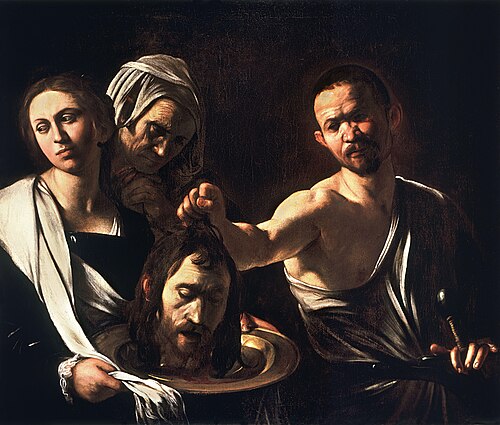
The Passion of Saint John the Baptist
Memorial
- Feast Day
- August 29
- Life
- d. 30
- Born
- Hill country of Judah
The Memorial of the Passion of Saint John the Baptist commemorates the martyrdom of John, son of Zechariah and Elizabeth, forerunner and precursor of Jesus Christ. The principal accounts are in the Synoptic Gospels (Matthew 14:1-12, Mark 6:14-29, Luke 9:7-9), supplemented by the Jewish historian Flavius Josephus (Antiquities 18.5.2), who locates the execution at the fortress of Machaerus, southeast of the Dead Sea, and confirms its political background.
According to the Gospel of Mark, the most detailed account, John had publicly rebuked the tetrarch Herod Antipas (son of Herod the Great) for his unlawful marriage to Herodias, the wife of his brother Philip. Herodias bore the prophet a grudge and wished to kill him; the tetrarch arrested John and held him in chains in the fortress of Machaerus, fearing him as a holy and righteous man. At the king's birthday banquet, the daughter of Herodias (named by Josephus as Salome) danced and so pleased Herod that he swore to give her whatever she should ask. At her mother's prompting she demanded the head of John the Baptist on a platter. The king, sorrowful but bound by his oath in the presence of his guests, sent the executioner; John was beheaded in the prison, and his head was brought on a platter and given to the girl, who gave it to her mother. His disciples came, took the body, and buried it.
The Memorial is one of the oldest in the Catholic Calendar, attested already in the third century at Sebaste in Samaria, where John's tomb was venerated. The post-Vatican II Calendar retains the celebration on August 29 as a Memorial in red, distinguishing the Solemnity of the Birth of Saint John the Baptist on June 24 (his nativity) from the Memorial of his death on August 29, the only saint in the Roman Calendar (apart from the Mother of God) to be honored by both feasts.
The Catechism cites John the Baptist as the greatest of the prophets and the first martyr in defense of the indissolubility of marriage (CCC 523). Pope Saint John Paul II in his angelus address of August 29, 2004, called the Passion of John the Baptist the witness of the absolute primacy of the truth of God over the conveniences of political power. The two Memorials, Birth and Passion, frame the Catholic ascetical tradition of John the precursor.
Patronages
Knights Hospitaller · tailors · lambs · converts · Quebec
Catholic Churches Named After The Passion of Saint John the Baptist
1 parish on Catholic Church Times share The Passion of Saint John the Baptist's name. Find their Mass times, confession schedules, and adoration hours:
- The Passionist Missionaries — Toronto, ON
Sources