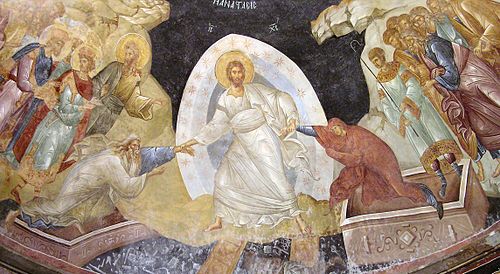
Easter Sunday of the Resurrection of the Lord
Solemnity
- Feast Day
- April 5
Easter Sunday of the Resurrection of the Lord is the greatest Solemnity of the entire liturgical year. The Universal Norms on the Liturgical Year and Calendar (no. 18) declare that Easter is the principle around which all other Christian feasts are ordered: by reason of the work of human redemption and the perfect glorification of God accomplished by Christ in the Paschal Mystery.
The date is determined by the rule established by the First Council of Nicaea in 325: Easter is celebrated on the Sunday following the first full moon on or after the spring equinox. In 2026 this falls on April 5.
The Mass of Easter Day proclaims the Gospel of the empty tomb (John 20:1-9 in Year A) and includes the Sequence Victimae Paschali Laudes. The Easter Octave (April 5-12) is celebrated as eight days as if it were one Solemnity of the Lord (Universal Norms 24), and during these days the Gloria and double Alleluia are sung at every Mass. The Octave concludes with the Second Sunday of Easter, designated by Pope Saint John Paul II in 2000 as Divine Mercy Sunday.
Easter Time extends fifty days, from Easter Sunday through Pentecost, and is celebrated in joy and exultation as one feast day, indeed as one great Sunday (Universal Norms 22).
The Resurrection of Christ is the central event of human history. Pope Saint John Paul II's apostolic letter Dies Domini (1998) calls Easter the Sunday of Sundays and the source from which every Sunday Eucharist draws its meaning. The Catechism of the Catholic Church (638) cites Saint Paul: if Christ has not been raised, your faith is vain (1 Corinthians 15:14). On Easter the Church renews the baptismal promises by which the faithful share in Christ's Death and Resurrection, sealed sacramentally in their own baptism.
Sources