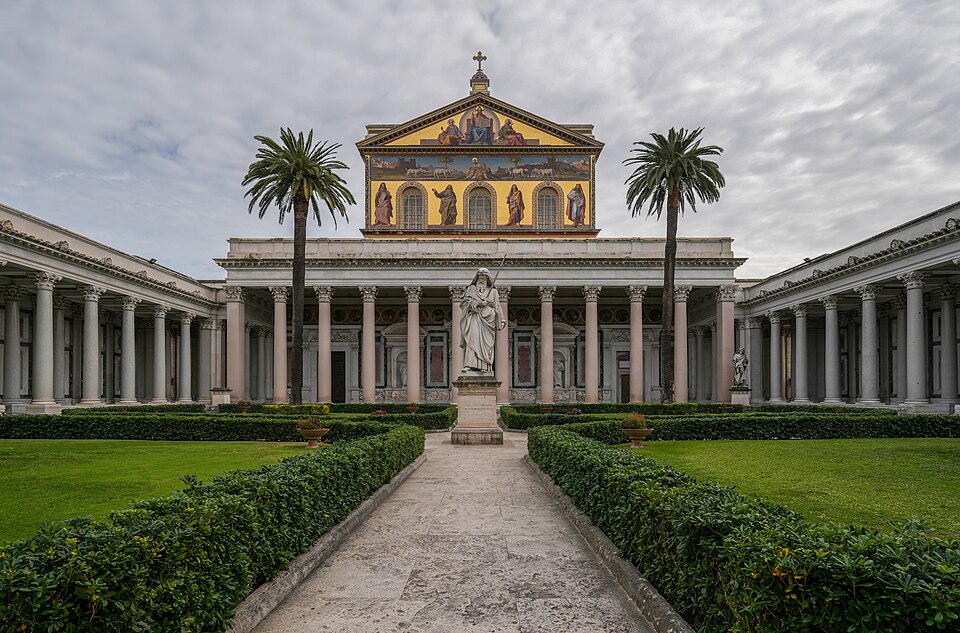
The Dedication of the Basilicas of Saints Peter and Paul, Apostles
Optional Memorial
- Feast Day
- November 18
This memorial commemorates the dedication of the two great Roman basilicas built over the tombs of the two apostles whose martyrdoms made Rome the chief see of the Catholic Church. The original Basilica of Saint Peter was built by the Emperor Constantine over the tomb of the apostle on the Vatican Hill and consecrated traditionally on November 18, 326; it stood for nearly twelve hundred years before being demolished and replaced by the present basilica, the largest church in Christendom, consecrated by Pope Urban VIII on November 18, 1626.
The Basilica of Saint Paul Outside-the-Walls stands over the tomb of Saint Paul on the Via Ostiensis, the road by which he was led out of Rome to his beheading under Nero. Constantine erected the first oratory there; the Theodosian basilica that replaced it was consecrated in 390 and remained almost unchanged until it was destroyed by fire on the night of July 15, 1823. Pope Pius IX rebuilt and consecrated the new basilica on December 10, 1854, two days after defining the dogma of the Immaculate Conception. The two basilicas mark the burial places of the two pillars of the Roman Church and are visited together on the patronal feast of Saints Peter and Paul (June 29).
The dedication of these two basilicas on the same memorial day expresses the truth that Peter and Paul together founded the Roman Church and that, in the Roman Canon's words, both are commemorated together as principes apostolorum. The day is a reminder that the Church's authority and the Church's mission - Peter's pastoral office and Paul's apostolic preaching - belong together.
Sources